

Search for “open-air photo booth how it works” and most of what comes back describes hardware: a frame, a camera, a printer, a box of props. That answers the host’s question about what arrives on the day. It says very little about the guest’s side of things, which is where a party photo booth experience is actually made or lost. A guest decides in a few seconds whether to walk over, and everything after that decision runs on small mechanics: whether the screen is obvious, whether someone is there to explain it, whether the line feels like a wait, and whether a photo reaches a phone before the night ends. This walkthrough follows one session from the first glance to the strip in hand, then explains what the attendant is doing, how props and prints behave in a full room, and what changes when the guest list is a wedding, a company party, or a birthday.
What an Open-Air Booth Actually Is
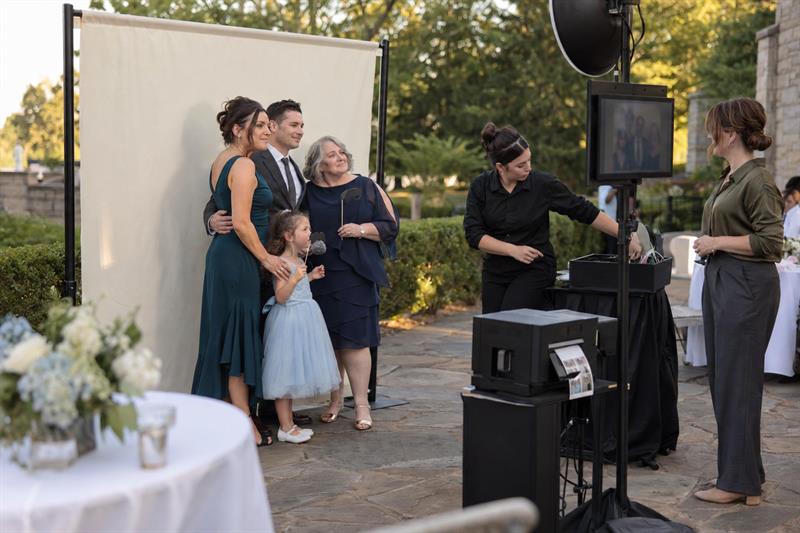
An open-air booth has no curtain and no sealed cabin. The camera, light and screen sit on a stand in front of a backdrop, and guests step into an open frame that stays visible from the room. That single difference shapes everything else about how it feels to use. A guest can see the pose before committing to it, watch a friend’s turn from the side, and join a group without squeezing into a compartment built for two.
The Photo Printz that Tech 3 Productions uses is a stand-up booth with an all-steel arcade-style body, sized for weddings, birthday parties, corporate events and fundraisers. Because nothing is enclosed, the booth reads as part of the room rather than a separate attraction parked in a corner. Groups can grow into the frame, a parent can stand just outside it with a toddler, and the next guest can tell at a glance whether the booth is busy. The open-air photo booth service page covers the hardware and the add-on options in more detail.
One Session, From Approach to Print
The session begins before anyone touches a button. An attendant greets the group, points out the props, and sets the pace. From there the sequence is short: choose a prop, step behind the marked spot, watch the screen, hold the pose through a handful of frames, then collect the strip. Guests who have never used a booth usually need one sentence of coaching, and that sentence is the attendant’s job rather than a sign’s.
Frames run in a burst, so the best photo is often the one nobody planned. The booth can also record live video messages, which gives a group a second way to leave something behind, particularly at a wedding or a send-off where a spoken note carries more weight than a pose. Booth service starts at two hours, and every booking includes an attendant, props and unlimited pictures, so nobody is counting frames or deciding which guest has earned a second turn.
Where the Booth Sits and How the Line Moves
Placement is the quietest part of the photo booth guest experience. A booth set beside the bar competes with the drink line; one set in a dark corridor gets skipped; one placed on the path between dinner tables and the dance floor gets used all night because guests pass it anyway. The good spot is usually visible from the room, lit enough that faces read on camera, clear of exits and service routes, and far enough from the speakers that a guest can hear the attendant.
Once the booth is in the right place, the line mostly manages itself. Guests arrive in pairs and small groups, and a cluster forms at the side rather than a queue across the floor. The attendant keeps that cluster moving, waves the next group in, and steps in when a larger party wants to pile into the frame. Crowd size changes the calculations rather than the mechanics: Tech 3 Productions has played for a dozen guests and for crowds of more than 500, and the same booth placement questions apply at both ends. If the room needs help before the booth is even discussed, the guidance on event lighting for weddings and corporate spaces covers how light and sightlines shape a space.
What the Attendant Does All Night
The attendant is the difference between a booth that works and a booth that sits idle. One or two professional attendants staff the booth, and delivery, setup and removal are included, so the host is not assembling a frame during cocktail hour or chasing a case at midnight. Setup happens before guests arrive: the frame goes up, the backdrop is squared, the screen is tested, and a trial strip confirms that the printer is doing what it should.
During the event the role is part host, part technician. The attendant invites hesitant guests over, explains the screen to anyone who needs it, resets props between groups, keeps the line in order, and handles the small interruptions that would otherwise stop the booth. That presence matters most for guests who would never approach an unattended machine: a grandparent, a colleague who came alone, a child too short to see the screen. A person standing there saying “give it a try” removes the social risk, and the photos that follow are usually the ones the host remembers.
Props, Backdrops, and the Guest’s Own Ideas
The prop box holds boas, tiaras and hats, and guests tend to build a character out of whatever is nearest. A scrapbook table with a keepsake book sits near the booth, which gives the photos a second life: guests paste a strip in, write a line beside it, and the book becomes a record of the night rather than a stack of duplicates in a drawer.
Strip design does some of the work too. Frames can carry a custom logo and font, run in color, black and white or sepia, and open with a designed welcome screen, which is how a corporate party gets its brand onto every photo without a sign explaining it. Guests also arrive with their own ideas, a family photo they want to recreate, a prop from home, a specific pose, and the attendant can usually make room for it. Booth time is bundled into the DJ and photo booth packages, with the Gold package adding up to three hours of booth service alongside the attendant, props, digital files and a photobook.
Prints, Digital Copies, and Sharing After the Photo
The strip prints in seconds, which matters more than it sounds. A guest who waits at the booth holds up the line behind them; a guest who walks away with a strip in hand clears the space and shows the next group what they are about to get. Reprints are unlimited, so a couple can hand one copy to a friend and keep another, and nobody has to negotiate over the last print.
Digital sharing runs on two tracks. Pictures can be emailed to guests, and the host receives digital copies of all photos and video from the event, which is the version that survives after the paper curls. The Gifyyy iPad booth takes a different route: a guest touches the screen, the booth snaps a few quick frames or stills, loops them into an animated GIF and texts it to the guest’s phone, ready to post before the next song starts. That immediacy is the whole appeal for a younger guest list.
Two habits keep sharing comfortable. Point guests to where their images will appear, by email, text or a link the host controls, and let them decide whether a photo goes public. A short note on the table or a line from the attendant covers it, and it saves the host from fielding questions the following week.
What Changes for Weddings, Corporate Events, and Private Parties
At a wedding, the booth usually runs alongside cocktail hour or the reception, and the guest mix decides the props and the strip design. The Ultimate tier includes a photo booth experience, and the wedding entertainment packages include up to six hours of DJ and MC service, so the booth sits inside the same run of events as the introductions, toasts and first dance rather than competing with them.
Corporate events lean on the branding side. Strips can carry a company logo and font, the company receives digital files of every photo, and the booth gives colleagues who do not dance something to do together. The corporate event entertainment page sets out how the format adapts across holiday parties, awards nights and fundraisers, and the corporate holiday party entertainment ideas walk through how a booth fits a seasonal schedule.
Private parties and birthdays run on a looser clock. Guests arrive and leave across the evening, children come back for a third turn, and the booth often ends up as the thing people do between cake and the last song. A shorter window works when the guest list is small, and a longer one pays off when families stay put.
Questions Guests Ask Most
Most of what guests want to know can be answered in a sentence, and the attendant handles the rest in person.
- How long until the photo is ready? The strip prints in seconds, and a reprint takes about as long.
- Can a group fit in the frame? Yes, an open-air booth takes pairs, families and larger groups without a cabin wall in the way.
- Can guests bring their own props? Usually, and the attendant will work them into the shot.
- Will the photos be available afterwards? Pictures can be emailed to guests, and the host keeps a digital set of the night’s photos and video.
- What if someone does not want to be photographed? They can watch, and the booth stays visible from the room, so stepping in is always a choice.
Key Takeaways
A few decisions do most of the work before the first guest steps into the frame.
- Pick the spot by traffic, not by floor plan symmetry: the booth should be on a route guests already walk.
- Check the light where the booth will stand, since a dark corner flattens faces no matter how good the camera is.
- Staff the full window that is booked, because an unattended booth loses the guests who need an invitation.
- Decide early whether strips should carry a name, a date or a company logo, and give the design a proofread.
- Tell guests how their photos reach them, and let them choose what gets shared.
Conclusion
Tech 3 Productions began as a disc jockey service in North Carolina in 1997, moved to Detroit in 1999, and added a photo booth in 2012. The company was a 2021 WeddingWire Couples’ Choice Award winner. A booth works when the frame is open, the attendant is present, the props are within reach and the photo is in a guest’s hand before the moment passes. Dates are checked through the availability tool on the site or by phone at (248) 259-8237, and the photo booth, DJ service and lighting can be planned as one evening rather than three separate bookings.