
If you have searched for what to expect from event DJ services, you have probably found plenty of pages describing a packed dance floor and very few describing the work that gets it there. The useful answer is a sequence of fairly ordinary steps: a planning conversation weeks out, a walkthrough of the room, a setup window before the doors open, a handful of microphone moments, and a load-out at the end of the night. Knowing that sequence in advance changes how the day feels. Rather than wondering whether the music will hold together, you understand who is doing what, and roughly when.
The Day in Order, From Load-In to Last Song
Event day tends to break into four blocks. Arrival and load-in come first, when cases, speakers, stands and lighting are carried in and staged where they will run. Setup and sound check follow: gear placed, cable secured, levels tested while the room is still empty so problems surface early. Then the event itself, moving from background music as guests settle, to quieter selections through dinner, to speeches on the microphone, to open dancing once the floor is ready. Load-out closes the night, with everything struck and the space returned the way the venue expects it.
The order rarely changes. The timing does, which is why the schedule is worth settling long before the date.
Before Event Day: The Planning Conversation
Most of the day is decided in a conversation that happens well before it. A DJ needs the shape of the event: when guests arrive, when dinner is served, when the toasts start, when the first dance happens, and when the venue expects the room cleared. Expect questions about venue rules too, because sound limits and setup windows usually live in a contract the host has already signed and may not have read closely.
Names matter more than most people expect. An announcement only lands when the pronunciation is right, so a careful planning conversation collects the names of the couple, the speakers, the honorees, and anyone being introduced. This is also when the must-play and do-not-play lists get written down, and when the DJ learns who the single point of contact will be on the day. Every package includes an experienced MC/DJ with club-level mixing, so the person building that timeline is often the person holding the microphone later.
What Event DJ Setup Involves at the Venue
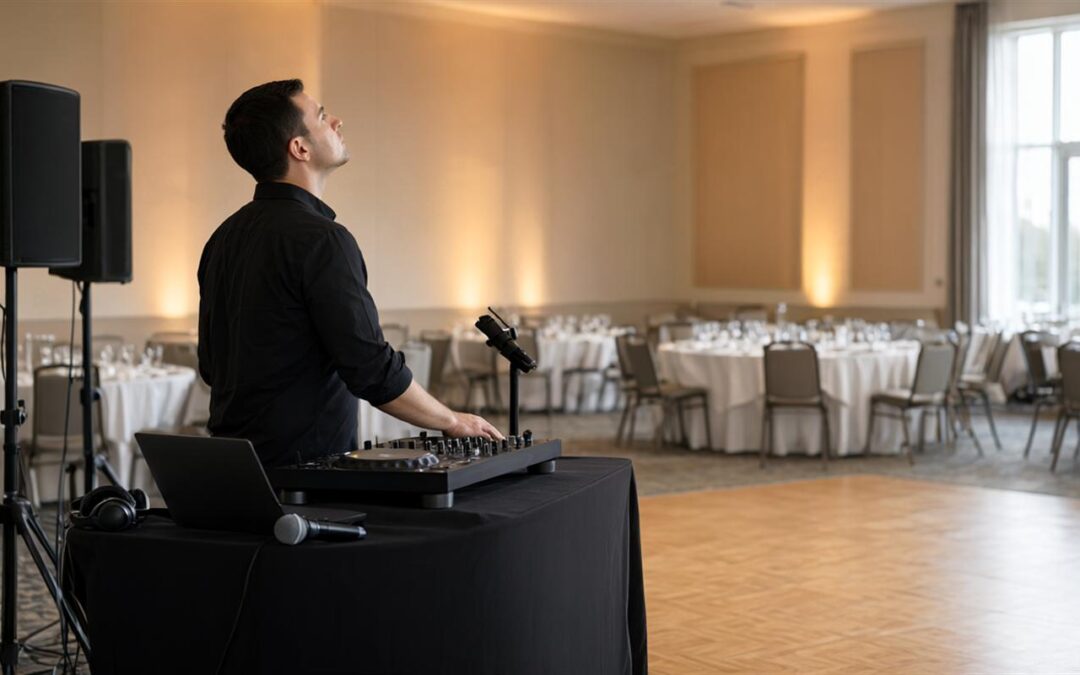
Event DJ setup is mostly logistics, and the visible part is small next to the work behind it. The table goes where the DJ can see the floor and be seen without blocking it. Speakers are positioned so the sound reaches the back of the room at a level the front tables can live with, and so nothing feeds back into a microphone. Cable runs get taped or matted across doorways and walkways, because a tripped guest is the kind of detail a room remembers. Lighting is placed for the space rather than for a photograph, with up-lights washing walls and moving fixtures turned away from seated guests.
The amount of equipment depends on the package chosen. Every package carries an intelligent LED light show and a professional HD sound system, while the Silver level adds up-lighting of up to 20 lights in any color, and the Ultimate level adds moving headlights, a custom monogram, Dancing on a Cloud and cold sparklers. None of that changes the order of the day. It changes how long setup takes and how early the room needs to be handed over, which is why the setup window belongs in the first planning conversation rather than the week-of email. For the broader picture of what a disc jockey service covers beyond the booth, the full disc jockey service details are worth reading before you book.
The Venue Walkthrough: What a DJ Checks Before the Party
Some DJs walk the room on the day of the event. Others do it days or weeks earlier, ideally while another event is running, so they can hear how the space behaves when it is full rather than how it sounds when it is empty. Either way, the walkthrough answers the same short list of questions. Where is the power, and is it on a circuit that can carry a sound system alongside a caterer’s warming trays? How does gear travel from the loading area to the room: a dock, a freight elevator, a staircase, a long hallway with a door that needs propping? Can the booth sit somewhere that leaves the fire exits and the bar queue clear?
Two more items come up often. One is the sound ceiling, whether it comes from a venue rule, a municipal limit, or a neighbor who has complained before. The other is the setup window: when the room is actually handed over, and who on the venue staff signs off that it is ready. A DJ who asks those questions in advance is not being difficult. That conversation is what keeps the first hour of an event from turning into a hunt for an outlet.
Your Role as the Host on Event Day
You have a job on the day, and it is smaller than most hosts prepare for. Hand over the timeline in its final form, including any change made that morning. Introduce the DJ to the venue manager and the photographer, since those three people will be coordinating the same moments from different angles. If dinner runs late, say so early rather than apologizing afterward; a schedule can shift in five minutes when the news arrives in time.
Then step back. The harder half of the host’s role is resisting the urge to steer the playlist from the floor, relay a guest’s request in person, or reopen the do-not-play list at nine o’clock. Those decisions were made for reasons worth honoring. Let the person you hired read the room, and spend your attention on the people you invited.
Music Selection, Requests, and Reading the Room
Guest requests are part of the job, and a DJ who refuses them outright tends to read as rigid. The usual approach is to take the request, weigh it against the plan, and decide whether it suits the moment. A song that lifts a room at ten in the evening can empty it at seven. This is where a do-not-play list earns its place, settling the awkward requests before they arrive, whether the reason is a song tied to an old relationship, a genre the family argues about, or lyrics too explicit for the guest list.
Reading a room is the least visible skill in the job and the one guests notice most. A floor that empties during a stretch of songs tells the DJ something no playlist can: the tempo was wrong, or the era was wrong, or the crowd needed a song it already knew. Expect the music to change direction more than once across the night. That is not indecision. It is the correction that keeps people dancing.
MC Work: Announcements, Toasts, and Timing
The microphone is a tool with a narrow purpose. It introduces the people being honored, calls attention to the first dance and the cake, hands the room to each speaker, and announces last call without draining the energy out of the evening. Every package includes two wireless microphones for speeches and toasts, which matters more than it sounds: one can stay at the booth while the other travels to a speaker, a toast-giver or an officiant, with no cable to trip over.
Good MC work is mostly invisible. Introductions stay short, names are correct, and the DJ knows when to say nothing and let the room hold a moment. Hosts rarely remember the announcements themselves. They remember whether the schedule felt rushed and whether the toasts started on time.
Backup Standards: What Should Be in Place Before You Book
Every package from Tech 3 Productions includes a back-up DJ and a back-up sound system, and it is worth understanding why that line sits in the package list instead of the fine print. A single laptop, a single mixer, a single wireless receiver: each one is a failure away from silence. A backup arrangement means a second person who can step in and a second sound path to switch to, so a dead channel becomes a two-minute delay rather than an early end to the dancing.
Ask any company what happens if a laptop dies mid-reception, and listen for a specific answer rather than a reassuring one. The DJ packages for weddings and events set out what each level includes, which makes comparisons across companies easier to hold in your head.
Questions to Ask Any Event DJ Before You Sign
Bring these to the first call rather than the week before the date. The answers say more about how the day will run than any sample playlist.
- When does the room have to be available for setup, and who confirms that on the venue side?
- How are guest requests handled once dancing starts?
- What happens if the equipment fails during the reception?
- Who arrives on the day, and is it the same person answering these questions now?
- How do you collect names and pronunciations before the announcements?
- Which decisions do you need before the event, and by what date?
Key Takeaways
- Ask for the setup window in writing, not just an arrival time; the gap between the two is where most day-of pressure comes from.
- Name one point of contact for the day, and make sure the venue and the DJ both have that name.
- Settle the do-not-play list early, so no one has to negotiate taste in front of an audience.
- Backup is a question about people first and equipment second. Ask who steps in, not only what is loaded in the vehicle.
A Calm Event Day Starts With Clear Answers
Most of what a host worries about on the day is settled long before it. Once the timeline, the pronunciations, the sound ceiling and the setup window are decided, the event has room to be what it should be, which is a party rather than a project. Tech 3 Productions has been running events since 1997, began as a disc jockey service in North Carolina, has worked from Detroit since 1999, and added a photo booth in 2012. The company was also a 2021 WeddingWire Couples’ Choice Award winner.
When you compare professional DJ services, the differences usually come down to preparation rather than equipment. To look at dates, check event dates and contact the team, or call (248) 259-8237.